
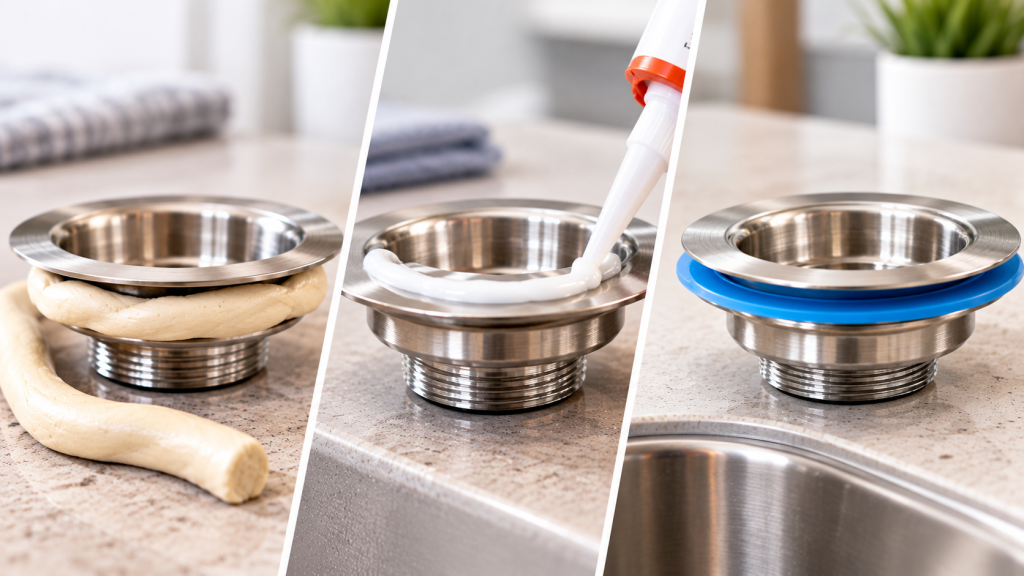
Plumber’s Putty vs. Silicone for Sink Drains: Which Is Better?
If you’re installing a new sink drain or replacing an old one, one of the first questions you’ll run into is whether to use plumber’s putty or silicone for a sink drain.
Both plumber’s putty and wet silicone sealant are commonly used to seal sink drains, and both can get the job done. But they work differently, and choosing the wrong material can lead to leaks, extra cleanup, or problems down the road.
Plumber’s putty has been a standard choice for decades, while wet silicone sealant is often recommended for certain sink materials and drain assemblies. So which one is better?
Let’s compare the advantages and disadvantages of each, and how they stand up to our reusable sink drain gasket which makes sealing a sink drain a whole lot easier.
What Is Plumber’s Putty Used For?
Plumber’s putty is a soft, moldable sealing compound used around sink drains and other plumbing fixtures. Unlike an adhesive, it stays flexible and doesn’t require curing.
When installing a sink drain, you roll the putty into a rope and place it underneath the drain’s top flange. As you tighten the drain assembly, the putty compresses between the flange and the sink surface, filling small gaps to help prevent leaks.
It’s a familiar process for professional plumbers and a common approach for DIY installations.
Advantages of plumber’s putty:
- No curing time before using the sink
- Easy to shape and apply
- Inexpensive and widely available
- Generally easier to remove than cured silicone sealant
What’s the Downside of Plumber’s Putty?
If you’ve worked with plumber’s putty before, you know how messy it can get.
As you tighten the drain, excess putty squeezes out around the flange. You’ll need to remove it, clean the sink, and make sure no residue gets left behind.
There’s also the possibility of using too much or too little. An uneven application can affect the seal, sometimes requiring you to remove the drain and start over.
Over time, certain putty formulations can dry out or deteriorate. And if you need to remove the drain later, you’ll generally need to scrape away the old putty and apply fresh material.
Another consideration is sink compatibility. Traditional oil-based putty can stain porous surfaces, including some natural stone materials, so it’s important to check the sink manufacturer’s recommendations.
Can You Use Wet Silicone Sealant Instead of Plumber’s Putty?
Yes. Wet silicone sealant is another option for sealing sink drains, provided it’s compatible with the sink and drain materials.
Unlike a preformed silicone gasket, wet silicone sealant comes in a tube and is applied as a paste. It then cures into a flexible, rubber-like material.
Instead of molding putty around the drain, you apply a bead of wet silicone underneath the flange. Once the drain is positioned and tightened, the sealant cures to form a water-resistant seal.
Wet silicone is often used when traditional plumber’s putty isn’t recommended, although the specific product and manufacturer instructions matter.
Advantages of wet silicone sealant:
- Creates a flexible, water-resistant seal
- Adheres to compatible surfaces
- Available in formulations for different sink materials
- Can provide a durable seal when properly applied
Why Wet Silicone Isn’t Always the Best Choice
The biggest inconvenience with wet silicone sealant for sink drains is the curing time.
Depending on the product and installation conditions, silicone may need 24 hours or longer before it’s ready for water exposure. That can be frustrating when you’re replacing a kitchen sink drain and want to use the sink that same day.
Application can also be messy. Excess sealant may squeeze out around the flange, and cleaning it up requires care.
Removing the drain later can be even more frustrating. Cured silicone adheres to the surfaces, so you may need to cut or scrape it away before reinstalling the drain.
For a professional plumber trying to finish a job efficiently, that means additional time. For a homeowner, it can turn a simple repair into a longer project.
Plumber’s Putty vs. Wet Silicone: How Do They Compare?
Here’s a quick look at the main differences.
| Feature | Plumber’s Putty | Wet Silicone Sealant |
| Application | Molded by hand | Applied as a bead |
| Curing time | None | Required |
| Immediate sink use | Generally yes | Usually no |
| Cleanup | Excess putty | Excess sealant |
| Removal | Typically easier | Can require scraping |
| Reusable | No | No |
| Compatibility | Depends on sink material | Depends on formulation |
So which should you choose?
Plumber’s putty is often convenient for traditional installations because there’s no waiting for it to cure. Wet silicone sealant may be a better choice when the sink or drain manufacturer specifically recommends it.
But both methods share one disadvantage: you’re working with a sealing compound that needs to be applied, cleaned up, and usually replaced if the drain is removed.
Is There a Better Alternative to Plumber’s Putty and Wet Silicone?
What if you could install a sink drain without rolling putty, squeezing wet silicone out of a tube, or worrying about curing time?
That’s where a reusable silicone drain gasket comes in.
Unlike wet silicone sealant, which starts as a paste and needs time to cure, a reusable silicone gasket is already formed and ready to install.
Instead of applying a sealing compound, you position the gasket directly beneath the drain’s top flange, in the same location where plumber’s putty or wet silicone would normally go.
When the drain assembly is tightened, the gasket compresses between the flange and the sink surface to create a watertight seal. There’s no excess material squeezing out around the drain, no messy cleanup, and no waiting for sealant to cure.
At Top Side Gaskets, we developed our reusable silicone drain gasket to simplify a process plumbers have been dealing with for decades.
Designed by a licensed plumber with more than 40 years of hands-on experience, our gasket offers a cleaner alternative without changing the familiar sink drain installation process.
How Do You Install a Sink Drain Gasket?
The process is straightforward:
- Position the gasket: Place it directly underneath the drain’s top flange, where you would normally apply plumber’s putty.
- Install the drain: Lower the drain assembly into the sink opening with the gasket in place.
- Tighten the assembly: Secure the drain according to the manufacturer’s instructions, allowing the gasket to compress and form a watertight seal.
- Remove and reuse when needed: If you need to remove the drain for maintenance or repairs, simply remove the gasket, clean it, and reuse it if it’s still in good condition. No scraping away old putty or cured silicone and starting over with fresh sealant.
Once the drain is properly installed and checked for leaks, the sink is ready to use.
Our reusable silicone gasket is designed to fit most standard sink drain assemblies, making it a practical option for professional plumbers, contractors, and homeowners.
Ready to skip the putty and wet silicone? Shop our reusable silicone drain gasket and discover a cleaner way to seal your next sink drain.